Urban Planning Lawyer's address at EUROPAN 18 – Santa Pola
Emilio M. Jordán, Urban Planning Lawyer at Santa Pola City Council. Technical Urban Planner. Senior Architect - 13/02/2026
Legal and urban planning framework of the Varadero-Cantera area regeneration project
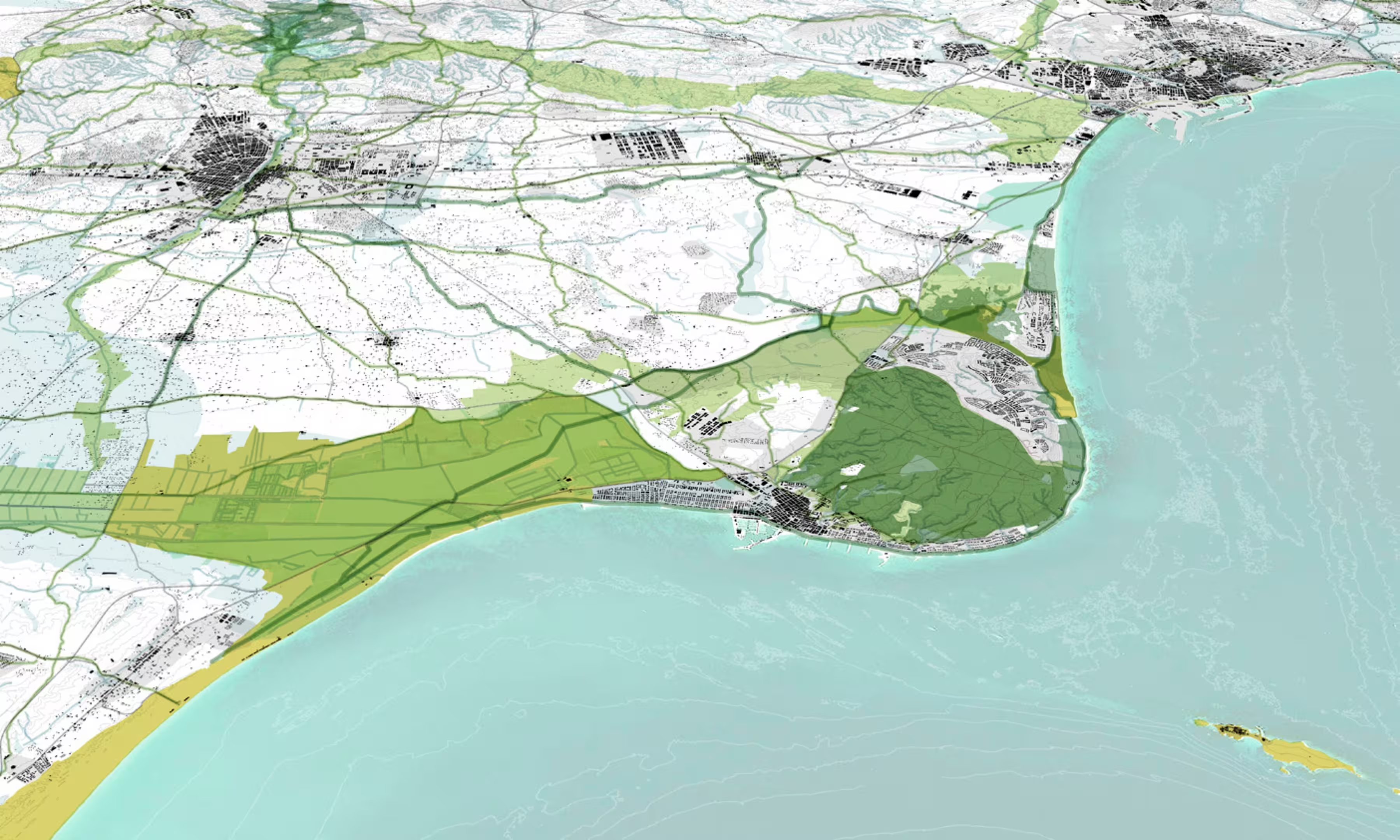
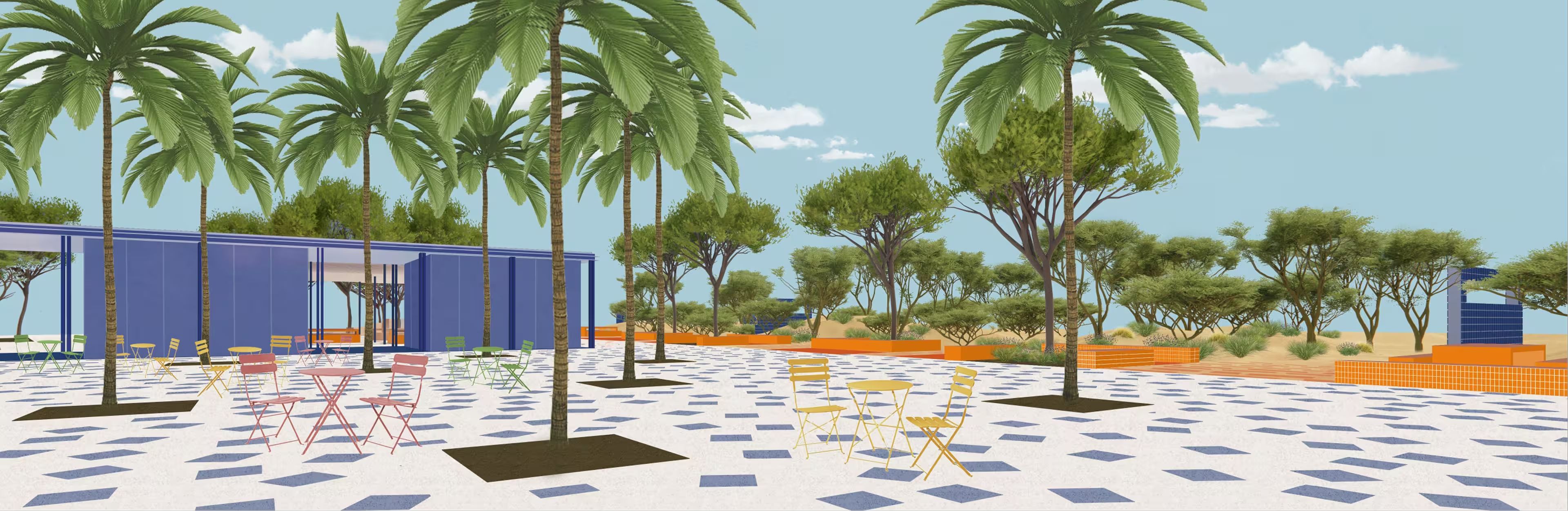
The cessation of activity at the Quarry and the end of the Shipyards' concessions have created a void in the urban space of the Levante expansion area. An area of 24 ha (240,000 m²) at a strategic point in the city.
The City Council, in the second year of the previous term, identified the need to organise this space for the common good.
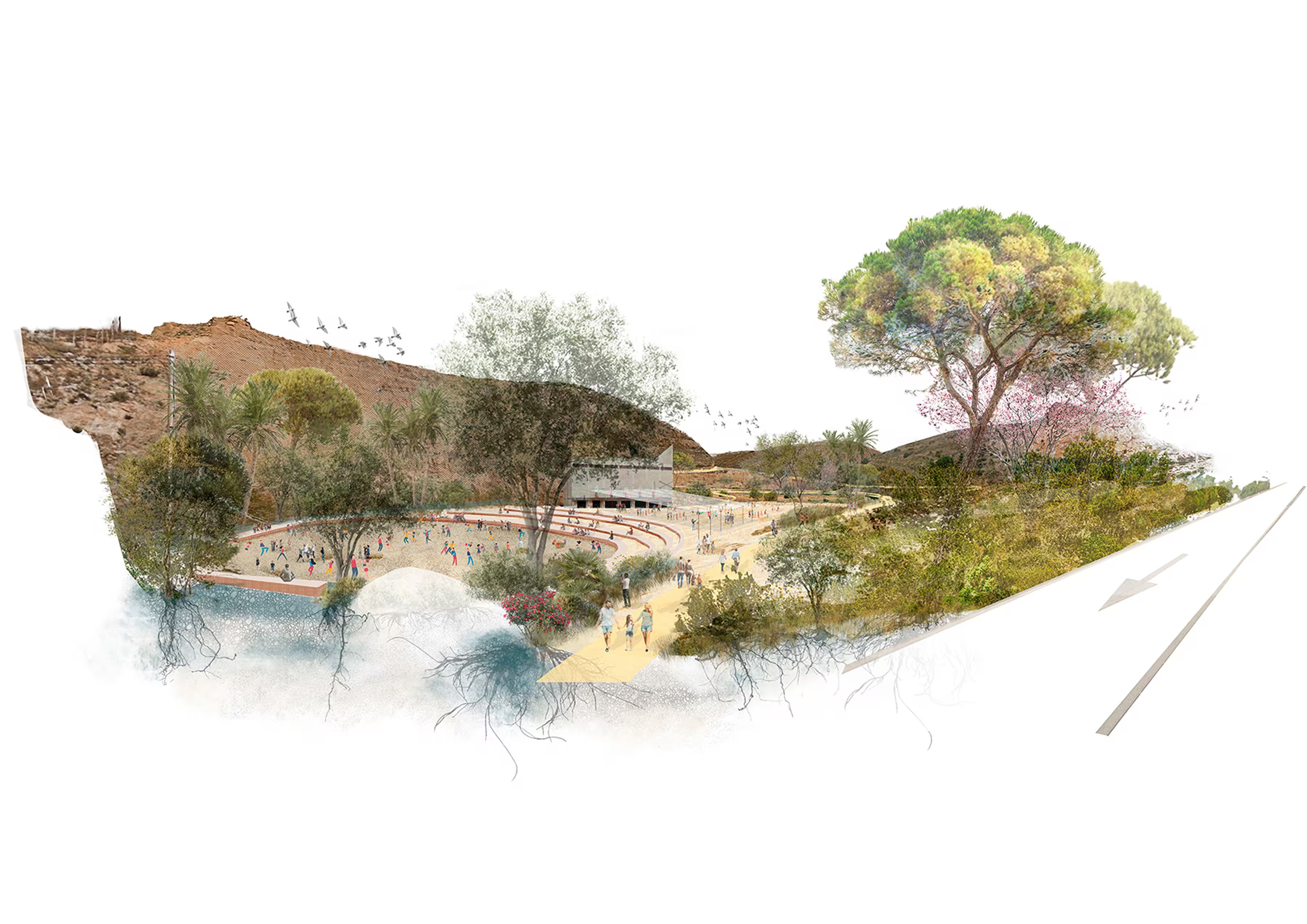
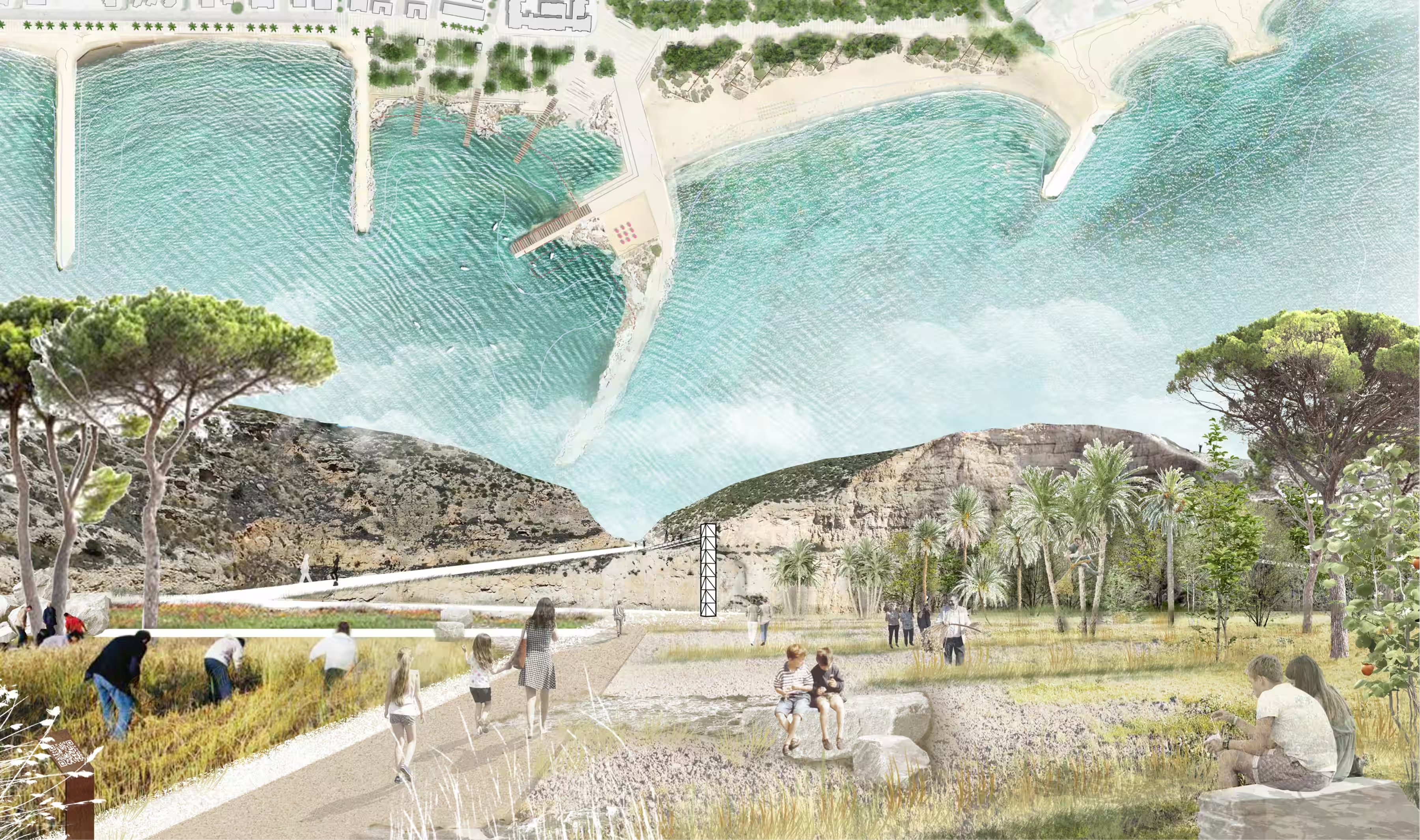
From a physical standpoint, it is a unique, complex and varied space between the mountain and the sea.
It is a space degraded by human activity that cries out for regeneration, where environmental issues must play a prominent role.
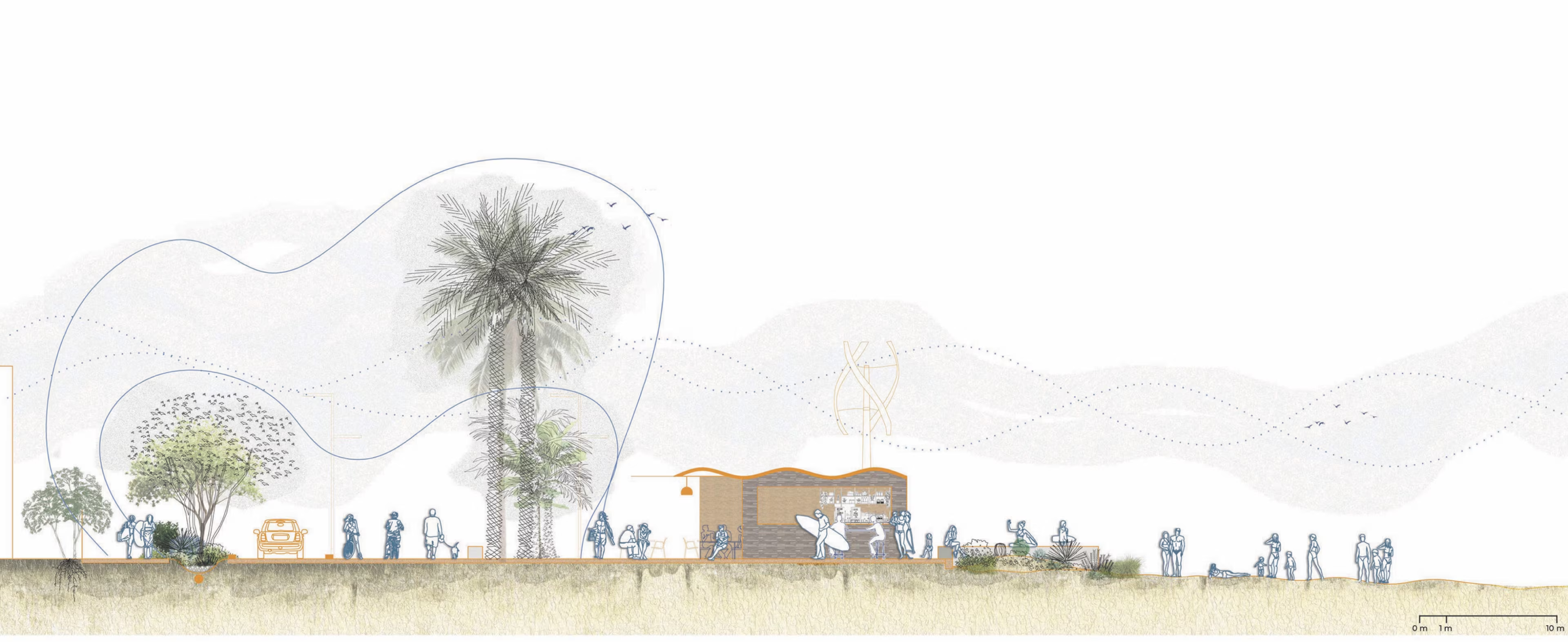
It is an anthropised space, poorly integrated into the urban fabric, divided spatially by infrastructure, services and urban communications — where the question of traffic cannot be avoided.
It is a space where the urban planning powers of the municipal administration and the Valencian Government converge, along with sectoral interests defended by other administrative bodies: Mining, Coastal, Forestry...
But it's not only problems. The disappearance of industrial and extractive uses presents an opportunity.
The question is: what to do, given the impossibility of returning point by point, level by level, to the "natural" state prior to human action?
The quarry has slopes and level differences that make it impossible to restore the ground to a flat state.
The hillside space between the mountain and the sea is occupied by buildings, infrastructure and urban services.
And on the waterfront we find a space degraded by the activity of the shipyards. Even Avda. Santiago Bernabéu (as the oldest residents can recall) was built on rubble — what today we would call inert construction waste.
The approach, therefore, should be to regenerate, rehabilitate and reuse. These three R's must serve the implementation of new uses. What uses should these be, and what formal arrangement should they adopt in the territory? — these were, and remain, the questions to be answered.
AND AT THIS POINT I WILL OPEN A PARENTHESIS to anticipate a reflection:
Since our first land laws back in 1956, probably inherited from the CIAM (International Congress of Modern Architecture, 1928–1959, Charter of Athens, 1942), a standard of open space provision (public parks) of 5 m² per inhabitant has applied. The registered population of Santa Pola (as recorded in the latest municipal register revision) was 39,709 inhabitants on 1 January 2025. We only need to multiply population by standard (198,545 m²) to realise the extraordinary opportunity that this reserve represents for our town:
- In a single piece of land.
- In a central, privileged position within the city.
- With an enviable physical, topographical and environmental variety.
- With extraordinary potential for recreational, cultural, educational and leisure activities.
But these uses (or any others) and their three-dimensional arrangement, "in Euclidean space", as one might say, requires a design, requires A PROJECT.
AND HERE I OPEN ANOTHER PARENTHESIS, to highlight two aspects or two design disciplines: 1st URBAN DESIGN, 2nd PLANNING.
The 1st concerns urban design in the broad sense. We needed, and still need, a project, with all that this entails in these times.
The 2nd concerns regulation, also in broad terms: a set of prescriptive propositions reached through a procedure in which Power — that is, the Administration — and citizens intervene.
What PROJECT? How do we arrive at the Project? Even: how do we arrive at the "best project we are capable of"? The City Council thought that EUROPAN COULD BE THE BEST ANSWER TO THAT QUESTION. Looking at the proposals on display today, I believe we were right.
As for the second question — that is, the translation of the Project into a PLAN — I recall: the anticipation of a future state, projected and prospected. And also regulation: a protective and even coercive instrument, governing conduct. This second question, I say, we are going to begin answering NOW:
The competition winners will team up with municipal technicians to draw up and accompany throughout the entire planning process, until it comes into force and effect, a SPECIAL PLAN to organise the VARADERO CANTERA space, where we hope that all public urban planning and sectoral interests converging in the area will be reconciled and harmonised in a shared common project that guides and obliges us all.
And I end with a key element that presides, penetrates and permeates all phases from beginning to end: both the Urban Design and the Planning phases. And that element, which the law also wants to be omnipresent, is PARTICIPATION.
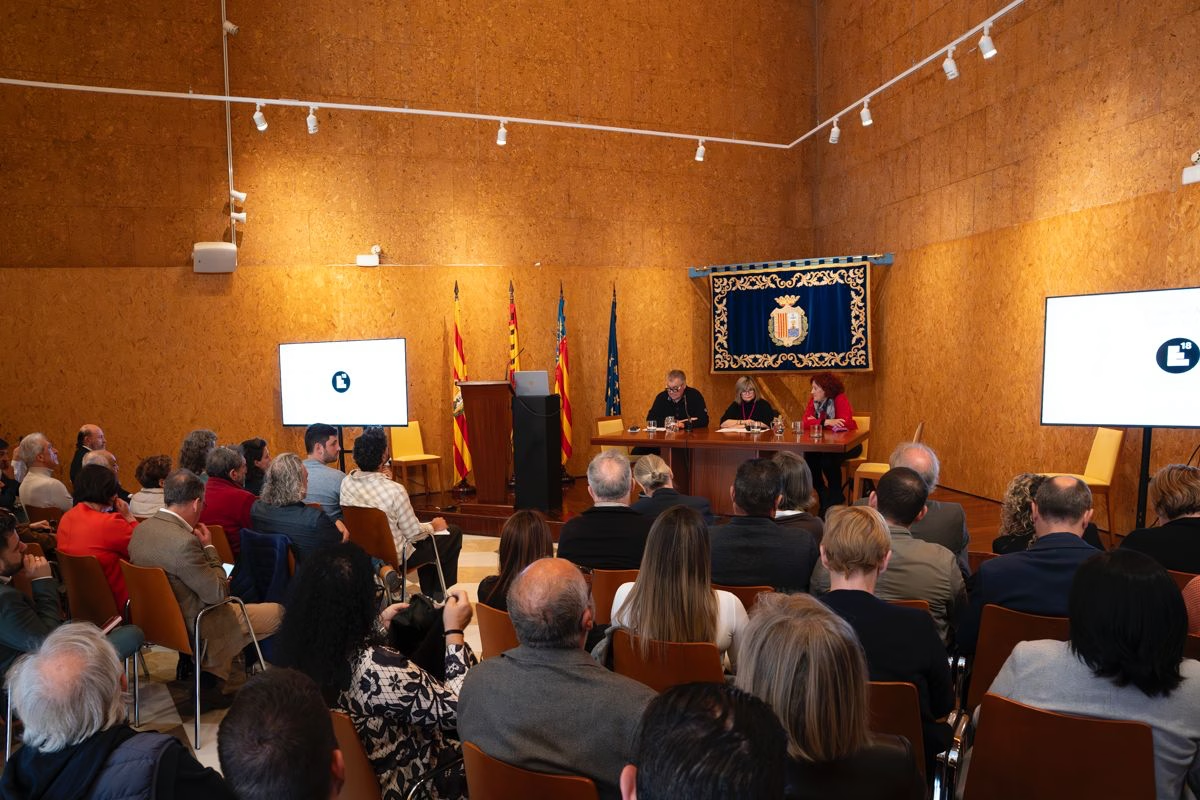
To generate, encourage and demand it from Society and its groups, networks, structures and movements, we hold this exhibition and these round tables: 3 in total — one institutional, one for citizen groups, and one professional/technical — where we launch PARTICIPATION.
The result of these processes and efforts will be reflected in a preliminary document: a Planning Advance. Subsequently, the SPECIAL PLAN drafting phase will follow. We sincerely hope for everyone's participation. As I said at the beginning: may it all be for the common good. OMNIA IN BONUM.
Thank you very much.